Acne Red Marks Treatment in Myeongdong Seoul
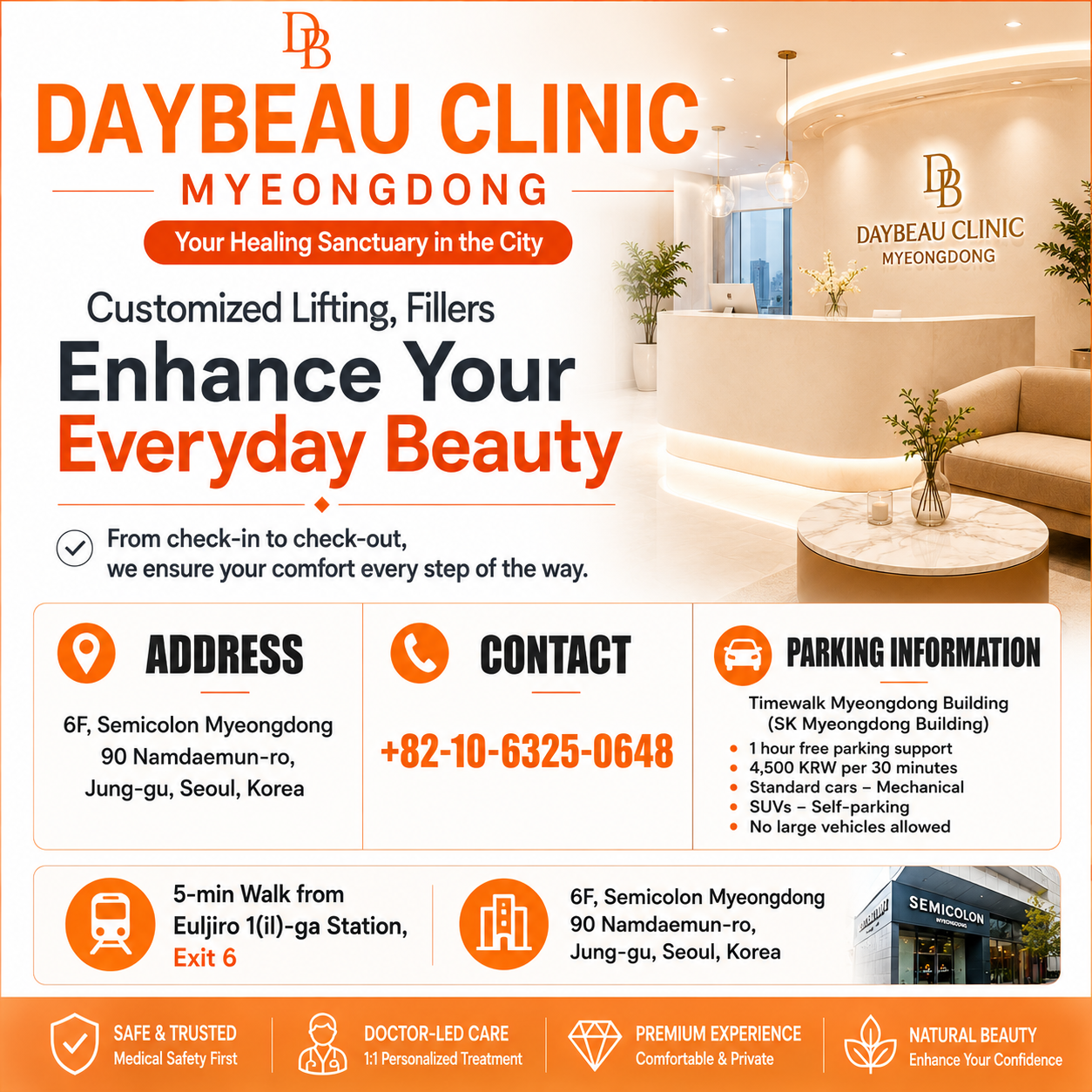
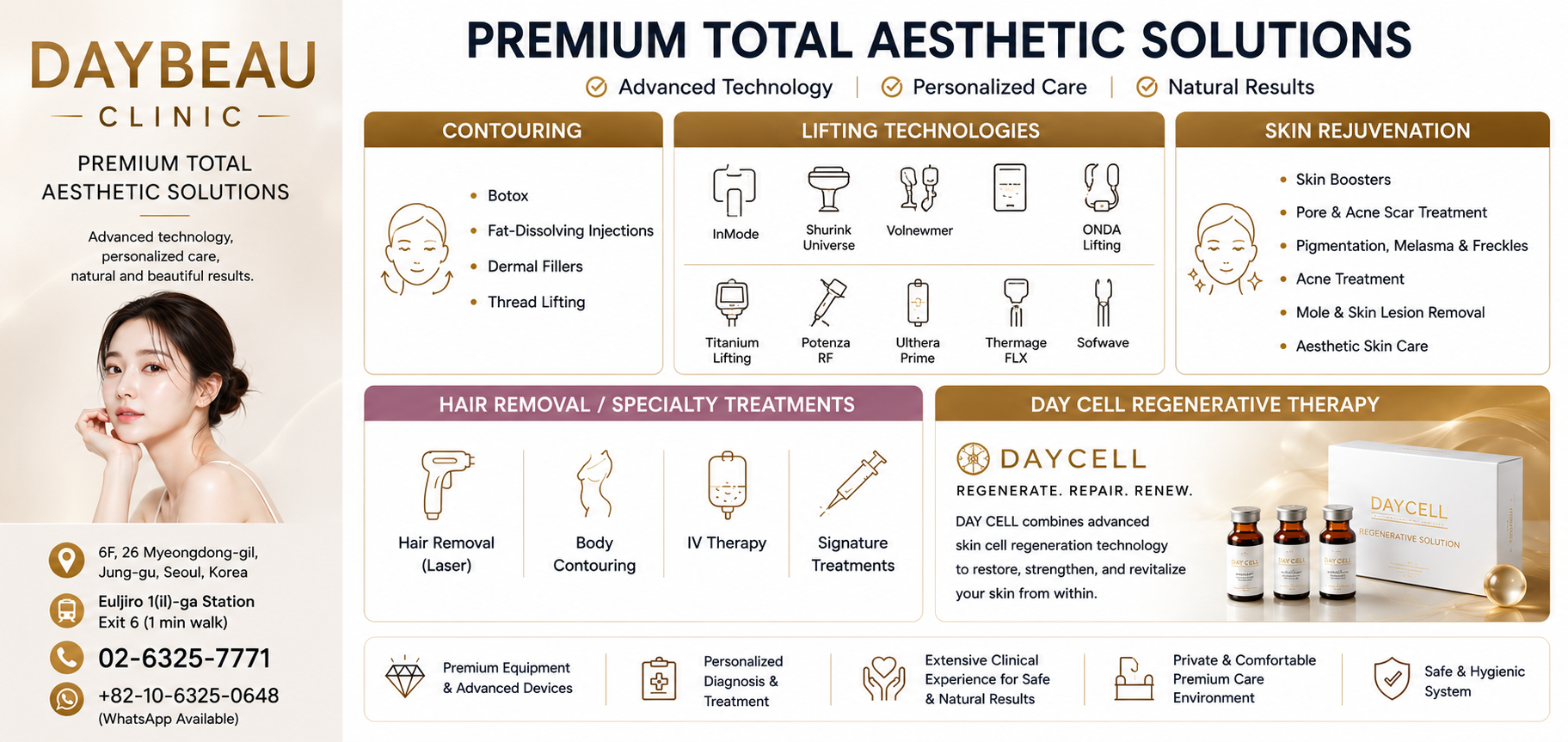
Myeongdong Daybeau Premium Branch
Discover Acne Red Marks Treatments in Myeongdong, Seoul at Myeongdong Daybeau Premium Branch.
Customized treatments may include vascular-focused laser or light-based treatments and supportive skin care to help reduce persistent red or pink marks after acne and create a clearer, more even-looking complexion.
What Are Acne Red Marks?
Red or pink marks remaining after an acne lesion heals are commonly associated with post-inflammatory erythema (PIE).
Unlike depressed acne scars, PIE does not necessarily involve permanent structural damage to the skin.
Instead, residual vascular changes after inflammation can leave visible red or pink areas.
What Causes Red Marks After Acne?
Acne inflammation can affect small blood vessels within the skin.
After the breakout resolves, vascular changes and residual inflammation may remain visible.
Factors that may make acne redness more noticeable include:
- Severe acne inflammation
- Picking or squeezing acne
- Sensitive skin
- Repeated breakouts
- Skin irritation
- Sun exposure
- Slow healing
Acne Red Marks vs Acne Scars
Acne red marks and acne scars are different concerns.
Acne red marks are generally flat red or pink areas remaining after inflammation.
Acne scars involve structural changes such as depressions, pits, or raised scar tissue.
Because they are different problems, they often require different treatments.
Acne Red Marks vs Brown Acne Marks
Post-acne marks can be either red or brown.
Red or pink marks are often associated with post-inflammatory erythema.
Brown or gray marks are more commonly associated with post-inflammatory hyperpigmentation (PIH).
Vascular-focused treatments may be more appropriate for redness, while pigment-focused treatments such as Pico Laser may be considered for brown pigmentation.
Laser Treatment for Acne Red Marks
Vascular-focused laser or light-based treatments may be considered when persistent redness is the main concern.
These treatments target vascular components within the skin rather than excess melanin.
The appropriate technology depends on the patient's redness pattern, skin type, sensitivity, and active acne condition.
Treatment for Post-Inflammatory Erythema (PIE)
PIE can gradually fade naturally, but persistent marks may remain noticeable for an extended period.
Treatment may focus on reducing vascular redness while avoiding unnecessary irritation.
Sun protection and gentle skin-barrier care can also be important during recovery.
Acne Red Marks on the Cheeks
The cheeks are a common area for persistent post-acne redness.
Multiple red marks can make the complexion appear uneven even when active acne has improved.
A customized treatment plan can address residual redness while considering whether active breakouts are still present.
Acne Red Marks and Sensitive Skin
Patients with acne-related redness may also have sensitive or irritated skin.
Aggressive exfoliation, excessive skincare ingredients, or inappropriate laser treatment may increase redness.
Treatment should therefore balance redness improvement with protection of the skin barrier.
Can Pico Laser Treat Acne Red Marks?
Pico Laser is generally more commonly used for brown post-acne pigmentation and uneven skin tone.
When marks are primarily red or pink, a vascular-focused treatment may be more appropriate.
Patients with both red and brown marks may require different treatments for each concern.
Can Potenza Treat Acne Red Marks?
Potenza RF Microneedling is more commonly considered for acne scars, enlarged pores, texture, and collagen remodeling.
For flat red marks without scarring, a vascular-focused treatment may be more directly suited to the concern.
Patients with both red marks and acne scars may benefit from a combination treatment plan.
Acne Red Marks and Active Acne
When active inflammatory acne is still present, controlling ongoing breakouts is important.
Treating residual redness without addressing new acne may result in new red marks continuing to develop.
A comprehensive acne program may therefore address both active acne and post-acne redness.
Can Acne Red Marks Fade Naturally?
Yes. Many red acne marks gradually become less visible as the skin heals.
However, the timeline varies significantly according to inflammation severity, skin type, repeated acne, sun exposure, and individual healing response.
Persistent redness may benefit from professional assessment.
How Many Treatments Do I Need?
The number of sessions depends on:
- Severity of redness
- Number of red marks
- Skin sensitivity
- Active acne
- Treatment technology
- Previous treatments
- Individual response
Multiple sessions may be recommended for widespread or persistent post-acne redness.
Is There Downtime After Acne Red Mark Treatment?
Downtime depends on the treatment used.
Vascular-focused procedures may cause temporary redness, warmth, sensitivity, or mild swelling.
Patients should follow post-treatment instructions and use appropriate sunscreen.
Can Acne Red Mark Treatment Be Combined With Acne Scar Treatment?
Yes. Many patients have a combination of red marks, brown pigmentation, enlarged pores, and depressed acne scars.
A customized program may therefore use different treatments for different concerns rather than relying on one device.
For example, vascular treatment may address redness while RF microneedling or fractional laser treatment targets structural scars.
Acne Red Marks Treatment in Myeongdong for Foreigners
Myeongdong is a convenient location for international patients seeking Korean acne and post-acne treatments during a Seoul trip.
Myeongdong Daybeau Premium Branch is accessible for visitors staying around Myeongdong, Euljiro, Jongno, City Hall, Seoul Station, and central Seoul.
International patients can receive customized treatment planning for post-acne redness, PIE, brown acne marks, active acne, enlarged pores, and acne scars.
Why Choose Myeongdong Daybeau Premium Branch for Acne Red Marks?
Successful post-acne treatment starts by determining whether the remaining marks are red, brown, or true structural scars.
At Myeongdong Daybeau Premium Branch, treatment planning can consider redness, pigmentation, active acne, sensitivity, scar type, pore condition, and previous treatments.
This helps select an appropriate treatment approach for clearer and more even-looking skin.
FAQs About Acne Red Marks in Myeongdong
What are the red marks left after acne?
Flat red or pink marks remaining after acne are commonly associated with post-inflammatory erythema (PIE).
Can acne red marks go away?
Yes. Many marks gradually fade naturally, although persistent redness may take longer and can sometimes benefit from treatment.
What is the best treatment for acne red marks?
The best treatment depends on the cause and skin type. Vascular-focused laser or light-based treatments may be considered for persistent post-acne redness.
Are red acne marks the same as acne scars?
No. Red marks are generally flat vascular changes, while acne scars involve structural changes in the skin.
What is the difference between red and brown acne marks?
Red marks are often vascular, while brown marks are generally caused by excess pigmentation after inflammation.
Does Pico Laser remove red acne marks?
Pico Laser is more commonly used for brown pigmentation. Vascular-focused treatment may be more appropriate for primarily red marks.
Can I treat acne scars and red marks together?
Yes. A customized program may use different treatments to address redness, pigmentation, pores, and structural acne scars.
Can foreigners get acne red mark treatment in Myeongdong?
Yes. International patients can receive customized post-acne treatment planning at Myeongdong Daybeau Premium Branch.
Visit Myeongdong Daybeau Premium Branch
Address
Myeongdong Daybeau Premium Branch
90 Namdaemun-ro, Jung-gu, Seoul 04534, South Korea
WhatsApp
+82-10-6325-0648